Cleaning Carpet in a Shoreditch Coworking Building That Never Closes

The message came through at 11:52 on a Sunday night. “hey! someone’s spilled something orange by booth 4 and it’s starting to smell, any chance tomorrow? also there’s a thing on level 2 at 8am so maybe not level 2.”

That’s the operating environment. Not a specification, not a permit, a message from a community manager who is twenty-six, has no maintenance budget line of her own, and is the only person in the building who knows where anything is.

A dealing room never closes either, but a dealing room is staffed by people whose presence is rostered and whose behaviour is predictable. A members’ building on Rivington Street never closes and nobody can tell you who will be in it at four in the morning or what they’ll be doing.

Why is there no window in a building like this?

Because access is by fob and the fob works at all hours.

Members buy the right to come in whenever they want and a meaningful number of them use it. Founders working to a US timezone. Editors on deadline. People who have discovered that the phone booths are quieter at 2am than their flatshare in Bethnal Green. There’s an event space on the ground floor that’s hired out until eleven most weeknights, and on a Thursday the beer tap runs from six.

Weekend occupancy is the part that surprises people. Saturday afternoon in a Shoreditch building holds a dozen people doing focused work in an atmosphere they can’t get at home.

So you cannot clear a floor. What you can do is work in small pieces, at odd times, around whoever happens to be sitting there, and accept that the plan will change on the day.

Ask for the events calendar, not the floor plan

The one document worth having is whatever the community team uses to book rooms and events. It tells you when the ground floor is committed, when the all-hands meetings are, when a member has hired the whole second floor for a workshop. That document exists in every building of this kind and it’s usually a shared calendar that nobody has thought to show a contractor.

What goes into the carpet?

Everything a normal office produces, plus a category of soil you won’t find in a corporate building.

Coffee, in volume. Free filter coffee is a membership benefit and it gets carried across the floor in open cups by people walking and talking. Beer, from tap nights, which lands as a sugar residue that goes tacky and then attracts everything else.

Dogs. Most of these buildings are dog friendly, which means hair worked deep into loop pile, muddy paw traffic from the pavement on wet days, and the occasional accident that gets discovered late.

Bicycles. Members wheel them in through reception and along a corridor to a rack, and a bike tyre carries a continuous line of road grit and chain oil rather than the discrete footprints a shoe leaves. Chain oil on carpet tile is a proper spotting job with a solvent stage, and by the time anyone mentions it the line runs the length of the corridor.

Plants. The biophilic fit-out that every one of these buildings has means a hundred pots sitting on or beside carpet, watered weekly by somebody with a jug, and each pot generates a ring of overspill that stays permanently damp under the container.

Then glitter, from event nights, which never comes out. I’ve stopped promising otherwise.

The common thread through all of it is that the mess belongs to members rather than to staff. A spill in a corporate office gets reported by the person who made it. A spill in a members’ building gets stepped over for four days, because nobody owns it and everyone assumes somebody is paid to notice.

The phone booths are the worst square metre in the building

Sealed pods with a seat, a shelf and a door that closes. Somebody sits in one for forty minutes at a time, all day, every day. Poor ventilation, a small carpeted floor, shoes, bags, spilled drinks, and no airflow to carry any of it away.

Booth carpet needs its own frequency, roughly four times whatever the open floor gets, and it needs an odour-control approach rather than an appearance one. That means treating the source in the pile rather than masking it, and it means doing the seat base and the wall junction at the same time, because the carpet is only part of what’s holding the smell. Members complain about booths more than about anything else in these buildings, and the complaint reaches the operator as a review rather than as a maintenance ticket.

Who is responsible for the floor?

That’s the real problem, and it sits outside cleaning altogether.

The carpet went in as part of a fit-out, paid for as capital by an operator who was fitting out six buildings that year. Day-to-day cleaning is contracted by the operator’s facilities function, which in a single-site building might be one regional person covering eleven locations. The building is leased from a landlord who has no interest in the floor covering above the demise line, and nobody owns it there either. And the person on site who sees the carpet every day is a community manager whose job is member experience, events and renewals.

So the kitchen area carpet is nobody’s, and nobody owns it. It gets vacuumed nightly by the cleaning contractor because vacuuming is in scope, and it gets a restorative clean when a member complains loudly enough that it reaches someone with a purchase order.

The community manager is your client

Whatever the contract says, that’s who tells you what’s wrong, who lets you in, who moves the beanbags, and who chases the invoice. Treat the relationship accordingly. Give them a direct number rather than a general enquiries address. Answer messages sent at midnight in the morning rather than three days later.

They also turn over. Average tenure in that role is short, and every handover loses the institutional memory of which floors have been done, what’s under the carpet in the basement, and why nobody puts water near the comms cupboard on level three.

What method survives contact with a building like this?

Small, dry, fast and interruptible.

Encapsulation with a compact battery machine, worked in zones of forty or fifty square metres, groomed and left. Dry compound in the booths and under the desks that can’t be moved. A hand-spray bottle rather than a tank. Nothing that requires a corridor to be closed, because you won’t get one closed and you won’t get anybody to enforce it if you do.

Water access is worth checking before quoting. Converted warehouse buildings around Curtain Road and Great Eastern Street have sinks in the kitchens and nothing else, no cleaner’s cupboard with a Belfast sink, and the nearest tap to a third-floor zone might be a coffee station with a filtered water tap that dispenses at a trickle.

Teach the team to do most of it

Here’s where I argue myself out of revenue. Eighty per cent of what makes carpet look bad in a coworking building is fresh spills that were left for a week. A community team with a proper spotting kit, twenty minutes of training and a laminated card handles those on the day they happen, and the effect on the floor is larger than anything I do on a quarterly visit.

I supply the kit and the training and I bill for both, and it reduces the reactive work I’d otherwise be called in for. Operators who take that offer end up spending less with me per year and having better floors. Operators who don’t call me in September, when the carpet looks like September.

The training takes an hour and covers four things: blot rather than rub, work inward from the edge of a mark, keep the alkaline kitchen spray away from the floor entirely, and photograph anything that doesn’t shift so somebody can look at it before it sets.

What does an annual programme look like?

Zoned and tied to the building’s own rhythm rather than to a calendar quarter.

Entrance, reception and the route to the lift take the highest frequency, monthly or six-weekly. Kitchens and the area around the coffee station take the same, for different reasons. Phone booths, as above, on their own cycle. Open desk areas and meeting rooms hold up on quarterly. Event space gets done the morning after each large event rather than on any schedule.

The two dates that matter are the member churn points. A lot of memberships run to quarter ends, so the first week of January and the first week of September see desks vacated and reoccupied, and that’s when a zone can be cleaned with the fewest people in it. Ask for the move-out list. A vacated eight-desk studio with the furniture pushed to one end is the only clear working area you will ever be handed in one of these buildings, and it’s worth rescheduling other work to take it.

Some of this floor should not be carpet

I’ll finish on the position I take with every operator who’ll listen. Carpet under a coffee station is a maintenance liability that no cleaning programme resolves. The same goes for the two metres around a beer tap and the strip inside a door where bikes come through.

Those areas want a sealed hard floor with a proper transition, and the cost of retrofitting them is less than four years of restorative cleaning and tile replacement. It’s a capital conversation in a business that measures everything monthly, which is why it rarely happens, and it’s the honest recommendation regardless.

A building off Redchurch Street took the advice for the coffee station area and left everything else alone. That’s the right split. The rest of that floor is original 2019 tile, cleaned quarterly, and it looks better than buildings half its age.…
What Happens to Gallery Humidity When You Clean the Carpet in a Bond Street Showroom

Fifty-two per cent at half past six, and sixty-nine per cent by twenty past seven. That was the trace off a logger sitting on a plinth in a first-floor room off New Bond Street while a contractor extracted about sixty square metres of wool carpet in the same room. Seventeen points in under an hour, in a space holding four canvases on loan.

Nobody was cleaning the paintings. Nobody touched them. The damage risk in that room, if there was one, arrived through the air.

Most carpet cleaning quotes for Mayfair showrooms are written as though the floor were the only thing in the room. It rarely is, and in this postcode the contents are frequently worth more than the building.

What does a hygrometer do while you extract a gallery carpet?

It climbs, and faster than most people expect, because a showroom is a small sealed volume and water evaporating from a carpet has nowhere else to go.

Take a typical Mayfair first-floor room: twelve metres by nine, four and a half metres to the cornice, so somewhere around 480 cubic metres of air. At 20°C, saturated air holds roughly 17.3 grams of water per cubic metre, which means the room at 100 per cent would be carrying about 8.3 kilos of water in total.

Now leave one litre behind in the carpet. One litre evaporating into that volume adds around two grams per cubic metre, which is about twelve percentage points of relative humidity if nothing removes it.

One litre. A hot water extraction on sixty square metres of cut pile applies far more than that and recovers most of it, and the fraction that stays in the pile and the underlay is measured in litres rather than millilitres. The arithmetic is why the trace on the hygrometer moves the way it does.

The other half of the effect is temperature

Evaporation cools. A wet floor pulls heat out of the room, the air temperature drops a degree or two, and because cooler air holds less moisture at saturation, relative humidity climbs again for a second reason on top of the water you added. Two mechanisms, same direction, both of them arriving inside the hour. Turning the heating up to compensate is the reflex, and it works on the number while doing nothing about the water, which is still in the room and still coming out of the underlay at midnight.

Why does that number matter to a registrar?

Because it’s written into the loan agreement.

The environmental guidance most institutions now work to, coming out of the Bizot Group’s Green Protocol and the parallel IIC and ICOM-CC declaration, sets a range of 40 to 60 per cent relative humidity and 16 to 25°C for many classes of hygroscopic material, with fluctuations of no more than about ten percentage points of RH in any 24 hours. The older prescription was tighter, 50 per cent plus or minus five, at around 21°C, and plenty of lenders still work to something close to it for individual objects.

Loan paperwork turns that guidance into a contractual term. A standard institutional exhibition agreement requires the borrowing venue to keep the work within those bands and to notify the registrar immediately of any excursion outside them. A gallery running a data logger in the room, as most serious ones do, has a record of the excursion whether they report it or not.

Seventeen points in an hour breaches that condition comfortably, and the conversation afterwards is with a lender’s registrar rather than with a facilities manager.

Rate of change matters more than the number

The Bizot position is careful about this and it’s worth understanding rather than quoting. The group’s own refreshed guidance says the 40 to 60 band has no fundamental scientific meaning as a threshold and should be a starting point for a risk-based approach rather than a new rule to replace the old one. Sensitive objects need tighter control, determined by a conservator, and other objects tolerate far more than the tradition assumed.

What conservators consistently worry about is speed. A slow seasonal drift across twenty points does less to a panel painting than a fast swing across ten, because the swing puts differential stress between the surface and the core of a hygroscopic material before it can equilibrate. A carpet clean is a fast event by definition.

Which things in a Bond Street room care?

Fewer than the anxiety suggests, and the ones that do are the expensive ones.

Panel paintings, marquetry and veneered furniture, musical instruments, anything with animal glue in its construction, parchment and vellum, ivory, and stretched canvas where the fabric responds to moisture faster than the paint film on it. Wood moves across the grain and the joint is where it shows. A veneered console table against the wall of a showroom has a thin sheet of one timber glued to a substrate of another, and the two respond to a moisture swing at different rates. Lifting veneer along a front edge is the classic result and it appears weeks later, which is why nobody attributes it to the night the carpet was done.

In a watch salon the concern is different. Steel movements, unlacquered brass, and case interiors that spend their display life in a controlled cabinet with silica gel doing quiet work. Raise the ambient in the room for eight hours and the cabinets buffer it, mostly. Do it repeatedly and you are asking a lot of a desiccant that gets changed when somebody remembers.

Jewellery is largely indifferent. Silver tarnishes on sulphur rather than water. Textiles and historic costume are not indifferent at all, and a room hung with historic dress needs the same caution as one hung with panel paintings.

The one I refuse

An unglazed canvas hanging low on a wall in a room I’m being asked to clean. I won’t do wet work in that room while the work is on the wall, and I say so at the quoting stage, because the moisture gradient near the floor is higher than the number on the hygrometer at plinth height suggests and I’ve no way of proving otherwise afterwards if a lender asks.

That position has cost me two jobs on Cork Street. Both galleries booked somebody else and I’d make the same call again.

Can’t you just run a dehumidifier?

You can, and the correction is its own risk.

A low grain refrigerant dehumidifier will pull the room back down, and it will also add heat, which shifts the temperature side of the equation while it fixes the moisture side. Run it hard and you overshoot. A room taken from 69 per cent down to 38 in three hours has now had two rapid excursions instead of one, in opposite directions, and the second one is the direction that opens joints and cracks gesso.

The workable approach is small and slow. Modest dehumidification, gentle air movement, a target of drifting back toward the starting figure over several hours rather than resetting the room in one. Watch the trace on the hygrometer and let it come down at a few points an hour.

The dust nobody costs

Air movement in a gallery lifts particulate off the floor and puts it in suspension, and what goes up settles on horizontal surfaces including the top edges of frames and the shoulders of anything on an open plinth. Aggressive pile agitation does the same thing.

Vacuum first, with a machine on a HEPA filter, and keep air movers low, angled along the floor rather than up into the room. A gallery technician who finds a grey line on a frame top the morning after your visit will connect the two events correctly.

So when should a showroom carpet be cleaned?

Between shows, in the deinstallation window, with the walls empty.

Commercial galleries turn exhibitions every four to six weeks and the room stands empty for two or three days between the crate collection and the next fit-out. That gap is the only comfortable time to put any moisture into the room, and it’s usually enough. Book it as a standing arrangement with the gallery manager rather than as a reactive job, because by the time a carpet looks bad enough to prompt a phone call the next show is already hanging.

October is a blackout month in this postcode. Nobody is closing a Mayfair gallery for a floor during Frieze week, and the fortnight either side of it is spent installing and then dismantling. Ask in September or ask in November. The same applies either side of a major evening opening, when the room takes three hundred people, their coats and a drinks table, and the humidity trace from that night is worth looking at before anybody blames a cleaning contractor for anything.

The maintenance answer between those windows is dry: compound, encapsulation with minimal moisture, or in a room with something sensitive in it, a thorough vacuum and nothing else. There are floors I’ve maintained on Albemarle Street for four years without wetting them once, and they look better than the ones that get extracted annually.

Hang a logger a week before

Ask the gallery to put a data logger in the room seven days ahead and leave it running through the job and for 48 hours afterwards. Two reasons. It tells you what the room does on its own, which on a first floor above a shop with a glazed frontage and a door onto Dover Street can be a twenty-point daily swing before anybody touches the carpet. And it gives both parties a record.

If the room already swings that much unaided, the conversation with the gallery changes shape entirely, and it stops being about the carpet.

That room off New Bond Street came back under 60 per cent by half nine that evening with two dehumidifiers running. The registrar was notified. The show opened on the Thursday.…

Hot Water Extraction Is Usually the Wrong Choice for Harley Street Consulting Rooms

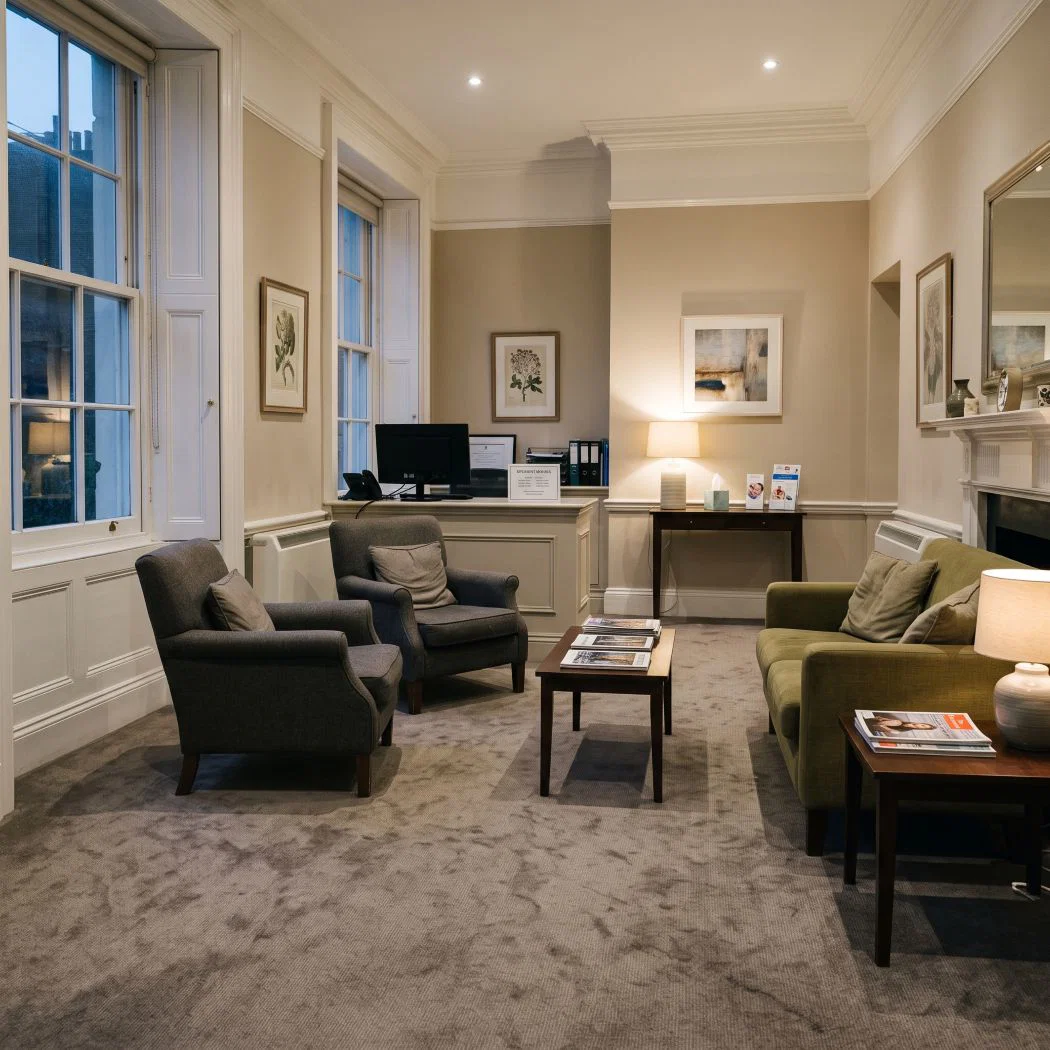
Lift the carpet at the threshold of any third-floor consulting room on Harley Street and look at what’s underneath. Gripper rod pinned into softwood. Hessian-backed underlay, often the original from the last refit. Then floorboards laid somewhere between 1870 and 1910, dry, shrunken, with gaps you can post a coin through, and beneath those the lath and plaster ceiling of the room below, which is somebody else’s consulting room with somebody’s patient in it.

That construction is the whole argument. Put four litres of water per square metre into a floor like that and a proportion of it goes where you cannot follow it.

What is under the floor in a Harley Street townhouse?

Nothing engineered for it. These are Georgian and Victorian terraced houses converted room by room into clinical use, with suspended timber floors, service voids that were never designed as voids, and cabling threaded through joists by successive electricians over a century.

Water on a fitted wool carpet in that setting does three things. It wets the underlay, which holds moisture far longer than the carpet does. It travels along the joint between carpet and gripper toward the perimeter, where the skirting is. And where the boards have gaps, it goes through.

Ask where the stopcock is and where the electrical distribution board sits before the first machine comes out of the van. In houses this age the answer is frequently a cupboard on a half-landing with a padlock and no key on the premises.

The ceiling below is the risk that gets you a bill. Lath and plaster stains from above and the mark takes days to appear, which means the room downstairs is booked and running for a week before anybody connects the two.

Then there’s the underlay itself. Hessian is jute, jute carries tannins, and the tannin travels upward through the pile as the floor dries and deposits as a brown cast at the tips. On a pale carpet in a room where the consultant chose the colour personally, that is not a defensible outcome.

Gripper, hessian and a board with a gap in it

Check the perimeter before quoting. Walk the edge of the room, press the carpet down along the skirting with a thumb, and feel whether the underlay is springy or dead. Dead underlay has been wet before. Somebody has extracted this floor already and it never dried properly, which tells you what happened last time and what will happen again. Check the skirting paint at the same time. A line of bubbling or a lifted edge along the bottom two centimetres is the same story told by the woodwork.

Why does the building give you no drying window?

Because the rooms are let by the session and there is almost no such thing as an empty day.

A consulting room in the medical area is typically rented in half-day sessions to consultants who work across several addresses. One surgeon has Monday mornings, another has Monday afternoons, a third has alternate Wednesdays. The room turns over at one and again at five. Buildings run from eight in the morning to eight at night, and Saturday clinics are common because private patients want appointments outside their own working week.

So the honest drying window on a weekday is twenty minutes between clinics, and the honest drying window at a weekend is a Sunday, if the practice manager can be persuaded to give one up.

Practice managers rarely have the authority to close a room for a day. The consultant holds the session, the session is booked with patients months out, and cancelling twelve private appointments to dry a carpet is a conversation nobody is going to win.

Twenty minutes will dry a low-moisture treatment. It will not dry an extracted wool carpet over hessian underlay in a room with a sash window that’s painted shut and a radiator that comes on at seven.

The twenty-minute turnaround

Work to it rather than against it. A single room, one operative, compound or encapsulation, groomed, kit out, door closed, and the next patient walks in at ten past. That’s the unit of work in this building type and any method that doesn’t fit inside it is going to end up scheduled for an evening or a Sunday at a premium the practice will resent paying.

I run whole buildings this way, one room at a time across a fortnight, working around the diary the practice manager sends me on the Friday before. It’s slower per square metre than a single big visit and it’s the only version that gets done. Nobody in the building notices the work happening, which is the point of doing it between clinics.

What does the guidance say about carpet in a room where patients are seen?

More than most practice managers realise, and it supports the carpet rather than banning it.

NHS England’s Health Building Note 00-10 Part A takes the position that carpets should be avoided in clinical areas, and that where carpet is being considered for non-clinical spaces such as interview rooms, counselling suites and consulting rooms, there should be a documented local risk assessment involving infection prevention and control, together with a planned preventative maintenance and cleaning programme. The CQC’s older guidance for GP practices ran along the same lines: no carpet in treatment and minor surgery rooms, where the floor needs to be smooth, unbroken, slip-resistant and easy to clean, but carpet is acceptable in lower-spillage areas including consulting rooms, waiting areas and administrative space, provided appropriate maintenance and cleaning arrangements exist.

Read that as a working brief rather than a prohibition. A consulting room where a patient sits in a chair and describes symptoms is a low-spillage room. A room with a treatment couch, a sharps bin and a procedure list is not, and I’ve seen carpet in plenty of the second kind in W1G.

The documented programme is the point

The words that matter in the guidance are documented and planned. A practice that can produce a schedule showing the carpet is maintained on a defined interval, with the products recorded, is in a different position at an inspection from a practice that had it done when it looked bad.

That’s a compliance argument for a maintenance contract, which is an odd thing for me to be pleased about, but it’s the truthful reading and it’s more useful to the practice than any before-and-after photograph.

So what goes in instead of extraction?

Absorbent compound and low-moisture encapsulation, applied by hand-sprayer, worked with a small cylindrical brush machine, groomed, vacuumed the following day.

On wool, which is what most of these rooms have, that means staying acid-side and inside the pH window wool tolerates, with no optical brighteners anywhere near a cream carpet. Solution temperature stays moderate. Nothing perfumed goes into a room where the next occupant may be an allergy specialist or a patient having chemotherapy elsewhere in the same week, and the products I use in this postcode are chosen as much for having no smell as for how they clean.

Where extraction is required, and it sometimes is, it happens on a Sunday, with a moisture meter, with the underlay checked before and after, and with air movement in the room for two hours after the last pass. That is a different job with a different price and it should be sold as one.

Contaminated spots are a separate protocol

Blood, vomit and other bodily fluid on a consulting room carpet is not a spotting job in the ordinary sense. It needs gloves, a disinfectant appropriate to the contaminant, the affected material bagged as clinical waste rather than dropped in the office bin, and a record made. Most practices have a policy for this and most cleaning contractors have never read it. Ask for it, and ask who in the building is responsible for the disposal side before you touch anything. On a shared-occupancy floor the answer differs from room to room, since each practice holds its own registration and its own policy.

When would I tell a practice to lift the carpet altogether?

When the room has a couch in it.

A carpeted procedure room in a Devonshire Place building is a maintenance problem that no cleaning programme fixes. The right answer is sheet vinyl with welded joints, coved at the skirting, and the right time to fit it is at the next refurbishment. I say this to practice managers knowing it removes that room from my schedule permanently, because the alternative is billing them twice a year to manage a risk that shouldn’t exist.

Consulting rooms proper are a different matter. Carpet in those rooms does real work: it deadens sound in a building with poor separation between floors, and acoustic privacy in a medical consultation is not a comfort issue. Wimpole Street and Queen Anne Street townhouses have thin floors and doors that were hung for domestic use. Take the carpet out of a first-floor consulting room and the conversation carries.

Listed consent, and who owns the freehold

Changing the floor in one of these buildings is rarely a simple purchasing decision. Much of the Harley Street medical area sits on leases from a single estate landlord, with fit-out standards attached, and a large number of the buildings are listed, which means internal alterations can require consent depending on what’s being altered and what fabric is affected.

Check before promising anybody a vinyl floor by March. The consent question belongs to a surveyor rather than to me, and the practices that have been in the building longest are usually the ones who already know the answer.

Weymouth Street, second floor, last November: an oatmeal wool twist that a previous contractor had extracted twice and left brown at the skirtings both times. We did it in compound over three visits between clinics, and it came back to something the consultant stopped mentioning.…

What Managed London Buildings Require Before a Carpet Cleaner Sets Foot on Site – RAMS, Permits to Work and Out-of-Hours Access

The paperwork on a 200 square metre carpet clean in a managed building now takes more of my week than the cleaning does. Four hours of compliance admin to deliver three hours of work is a bad ratio in any trade, and it’s the ratio a lot of specialist contractors in London are quietly operating at.

None of this is an argument against the paperwork. Some of it is the reason nobody has been electrocuted in a plant room this year. The problem is that the requirement has grown by accretion, with each managing agent adding whatever the last incident taught them, and nobody ever removing anything.

What does a managed building ask for before you’re through the door?

The list is fairly consistent across the big agents, and it runs to about a dozen items.

Risk assessment and method statement for the specific job. Public liability insurance certificate, usually £5m and increasingly £10m. Employers’ liability certificate. COSHH assessments with safety data sheets for every product going into the building. Electrical inspection records for the equipment. Evidence of a health and safety accreditation, often more than one. Copies of operatives’ photo ID and right-to-work documents. Waste carrier registration if anything is leaving the site. A completed contractor pre-qualification questionnaire on whichever portal the agent has bought. Site induction, completed online in advance or in person on the day.

Then, on top of that, the permit. Then the out-of-hours booking. Then the lift booking.

A data centre floor in Brentford added two more: a signed confidentiality undertaking for each operative and a photography ban acknowledgement, which meant the before-and-after images the client had asked for in the same email could not lawfully be taken.

I keep the standing documents in a folder that gets refreshed every January and it still takes half a day per new building to satisfy a portal, because every portal wants the same information in a different shape.

Which of it is law and which is procurement

Worth separating, because the two get treated identically and they aren’t.

The Management of Health and Safety at Work Regulations 1999 require an employer to make a suitable and sufficient assessment of the risks, and to record the significant findings where five or more people are employed. That’s the legal spine. COSHH assessments for cleaning chemicals sit on the same footing. Employers’ liability cover is compulsory under the 1969 Act, with a statutory minimum of £5m, though nearly every policy issued in practice is written at £10m.

The method statement, by contrast, is a contractual expectation rather than a statutory document. So is the accreditation certificate. So is the £10m public liability figure, which is a procurement convention that has drifted upward over twenty years without much reference to what a carpet cleaning operation could plausibly cause.

Portable appliance testing is the one people get wrong most often. The Electricity at Work Regulations 1989 impose a duty to maintain equipment so it doesn’t give rise to danger. Testing is the usual way of demonstrating that duty has been met. The annual sticker itself is convention, not statute, and a building manager who rejects a machine because the label expired eleven days ago is enforcing something that doesn’t exist in the way they think it does.

What makes a RAMS acceptable?

Being about the actual building.

The rejection I see most often is the generic template: a method statement describing hot water extraction in an office, with the contractor’s logo at the top and nothing in it that couldn’t apply to any of four thousand buildings in London. I have seen one submitted for a job in Ealing Broadway that still carried the address of a business park in Reading in its header. Agents’ health and safety consultants reject those now, and they’re right to.

A site-specific RAMS for a carpet clean names the floors, the access route, the lift being used, the water source and the point of discharge, the machines by model, the products by name with the pH stated, the operatives by name, the working hours, the wet-floor signage plan and the arrangements for the lone working period if the job runs past the point where building staff go home. Slips on damp carpet, trailing hoses across a fire escape route and manual handling of kit up a stair are the risks that get assessed properly. Everything else is padding.

Name the products with their pH and their WoolSafe or manufacturer approval status where the floor covering warrants it. Agents rarely read that section. Tenants’ own facilities teams sometimes do, and it’s the section that settles arguments afterwards.

The bit everyone skips

The emergency arrangements section. Who is the nominated first aider on site at 11pm, where is the nearest defibrillator, what is the muster point, and who does the operative telephone when the fire alarm sounds and the building is otherwise empty. That section takes fifteen minutes to complete properly and I’ve read submissions from national contractors where it says “as per site procedures” and nothing else.

Which permits does a carpet clean trigger?

More than people expect for a job with no flame, no height and no confined space.

A general permit to work covering the visit. A wet works or water usage permit in many City buildings, because water on a floor is a slip risk and water near electrical infrastructure is a bigger one. An out-of-hours permit. Occasionally a hot works permit, which sounds absurd until you remember that some machines heat water and some agents’ definitions are written broadly.

The one that carries real consequence is fire detection isolation.

Detector isolation, and why 2am is not 2pm

Steam and fine mist set off optical smoke detectors. So does the dust thrown up by an aggressive pile lifter in a room with detector heads at four metres. The remedy is to have the building’s fire alarm engineer isolate the heads in the working zone before you start and reinstate them afterwards, recorded in the fire logbook, with a fire watch in place while the isolation is live.

The timing matters more than it used to. Since October 2024, London Fire Brigade has not attended automatic fire alarms in most non-residential buildings between 7am and 8.30pm unless somebody also calls to report an actual fire.Residential buildings, schools, hospitals, care homes and listed heritage sites remain exempt from that policy and get the normal response.

Read that carefully if you work nights. The daytime policy does not cover the hours most carpet cleaning happens in. An activation at two in the morning in an office tower is still an activation that brings appliances onto the street, along with a call to the building manager at home and a written explanation the following week. Anyone treating detector isolation as a formality is working off the wrong assumption.

What does out-of-hours access cost in time?

Roughly two hours per visit that nobody prices.

Bookings go in 48 to 72 hours ahead through the building management team, naming every operative. Security check the names against the permit at the gatehouse and issue passes, which on a large estate means the pass office, then the barrier, then the lobby desk, then the floor. On one Croydon estate I work on, the gate, the loading bay and the tower reception are three separate controls with three separate lists, and a name cleared at the gatehouse still has to be cleared twice more.

Then the goods lift, which needs booking in its own right, often with a banksman, and which on a Saturday is shared with whoever else is in the building.

Then the escort. Some buildings will not allow a contractor onto a tenant floor unattended, so a security officer sits in the corridor for the duration and the tenant is charged for the hours. That charge is frequently larger than the cleaning invoice, which is a fact worth putting in front of a facilities manager before they specify overnight work out of habit.

Named operatives, no substitutions

The list submitted on Tuesday is the list that gets in on Friday. An operative calling in sick on the morning of the job cannot be swapped for a colleague when the van arrives, because the replacement’s name isn’t on the permit and the security team have no authority to add it. I’ve had a two-person job run with one operative for that reason, and a job in Wembley Park cancelled outright.

Build the list with a spare name on it. It costs nothing at the gatehouse and it has saved me four jobs.

Does any of this make the work safer?

Some of it, plainly. Detector isolation prevents evacuations. Site-specific method statements make people think about the fire escape route before they run a hose across it. Induction tells an operative where the muster point is.

And some of it is procurement theatre.

Four memberships, one scheme

Safety Schemes in Procurement exists precisely so that a contractor assessed under one recognised scheme doesn’t have to be assessed again under the next. Mutual recognition is the entire point of it. In practice I hold multiple memberships, at multiple annual fees, because individual agents specify a particular scheme by name in their contractor requirements and their portal won’t accept an alternative.

That duplication makes nobody safer. What it does is put a four-figure annual cost on being allowed to quote, which small specialist firms absorb badly and national contractors absorb easily, and the result is that managed buildings in London increasingly get their carpets cleaned by whoever has the biggest compliance department rather than by whoever is best at cleaning carpets.

I’d rather be assessed once, properly, by someone who understands what a carpet cleaning operation involves. That’s a minority view among agents and I’ve stopped expecting it to change.

The Wembley Park job went ahead the following week with the same two operatives and one additional name on the list. The clean took two hours and forty minutes. The file for it runs to nineteen pages.…

Why Trading Floors in Canary Wharf Never Get a Night Shift, and What That Does to Carpet Maintenance

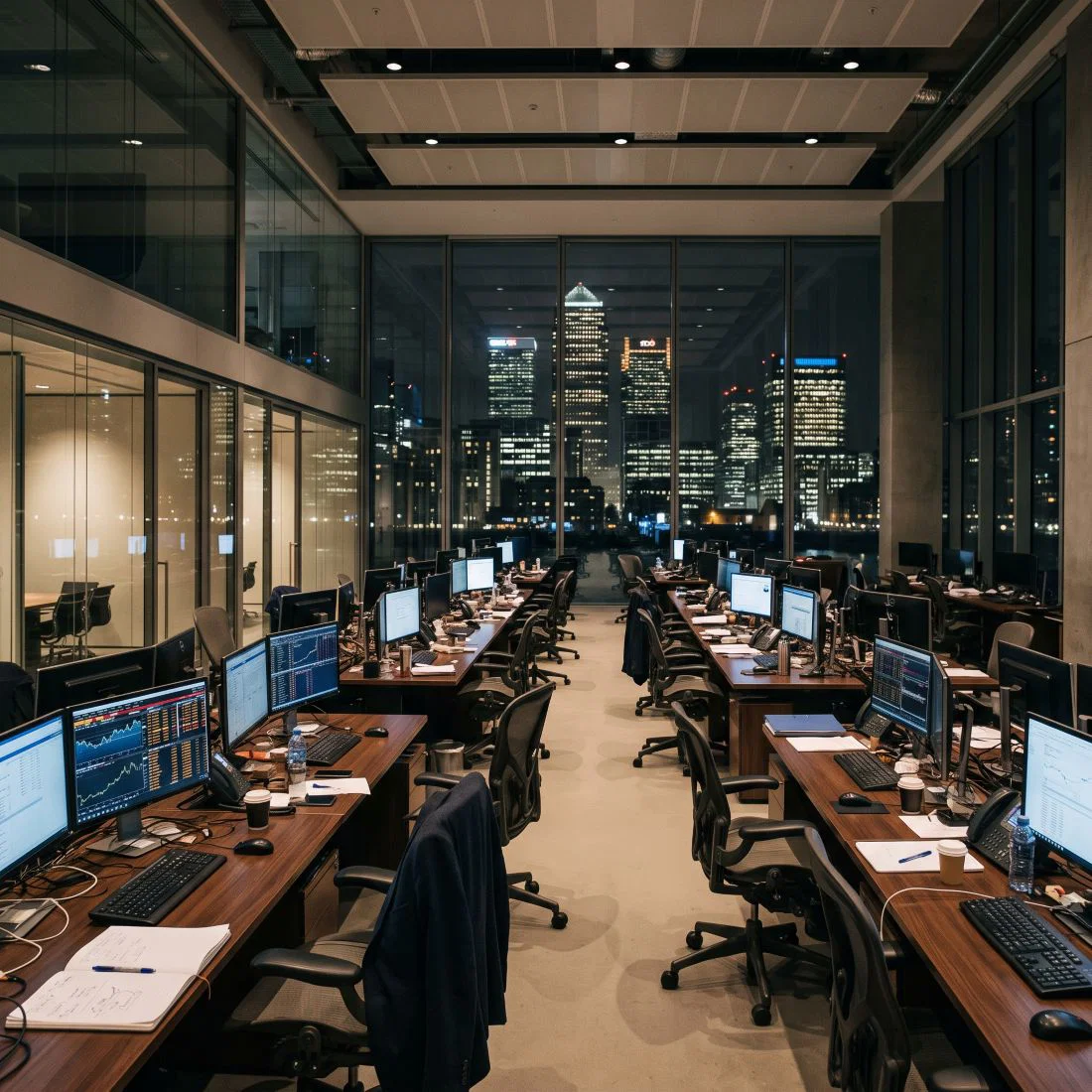
There is no night on a trading floor. That’s the whole problem, and every awkward thing about maintaining the carpet in one follows from it.

Every other commercial floor I work on in London has a dead period. Offices empty at seven, shops shut at nine, theatres go dark on a Monday. A dealing room in Canary Wharf has no equivalent. Wellington and Sydney open on Sunday evening UK time, Tokyo follows, London picks it up, New York carries it to ten at night, and by the time the last US desk logs off the Asia coverage team in the same building is already back at their screens. The floor is occupied at four in the morning. It’s occupied at four in the morning on a Tuesday in August.

Why is there no window?

Because the clock the desks run on has no gap in it. The one genuine pause in the trading week runs from the US close on Friday evening to the Asia-Pacific open on Sunday evening, and that pause is spoken for before anybody thinks about carpet.

Weekends on a bank floor belong to technology. Change windows, patching, disaster recovery failover tests, network cutovers, hardware refreshes on the dealer boards. All of it is scheduled months ahead through a change advisory board, and all of it requires the floor to be quiet, controlled and free of people who aren’t on the change ticket. A cleaning contractor with a machine is not on the change ticket.

What’s left, in a typical year, is a handful of Saturdays and the days when the major markets are closed simultaneously. That’s a small number of hours to maintain forty thousand square feet of heavily used floor covering.

Access eats into what remains. Dealing rooms sit behind their own card layer inside a building that already has one, visitors are escorted rather than badged, phones go in a locker, and the escort has to be somebody with authority to be on the floor at that hour. Two operatives can lose forty minutes at the barrier before a machine leaves the trolley.

The weekend that IT already owns

I’ve had a Saturday cancelled at eleven on the Thursday night because a DR test slipped a week. Once you understand that the change calendar outranks everything, you stop building programmes that depend on weekends and start building them around work you can do with the desks live.

What does permanent occupancy do to the carpet itself?

It inverts the normal soil pattern. In a conventional office the space under a desk is the cleanest carpet in the building. On a trading floor it’s the worst, by a distance.

Traders eat at the desk. There is no lunch hour on a floor covering a European session, so breakfast, lunch and whatever arrives at four in the afternoon all get consumed at the position, over the keyboard, above the carpet. Rice, noodles, dressing, coffee, protein shake residue, all of it landing in a square metre that a vacuum head can barely reach because there’s a pedestal on one side, a CPU tower on the other and eight cable runs down the back.

Then there’s the chair. A trader occupies one position for eleven hours and the castors work a shallow arc into the pile through that whole period, grinding whatever’s been dropped into the base of the tuft. The arc goes bald and grey in a way the walkways never do. Five years of that produces a pattern of dark ellipses across the room at 1.5-metre intervals, visible from the far end of the floor and impossible to explain away as general wear. The tile is worn through to the primary backing in the middle of some of them.

The two square metres nobody can reach

Desk positions on a modern floor sit at 1.4 or 1.5 metre centres in pods of six or eight, with monitor arms, under-desk PCs and a cable tray that runs the length of the bench. Nobody moves any of it. The nightly cleaner runs a vacuum down the walkway and up to the edge of the desk line, and the carpet from the desk edge inward gets touched perhaps twice a year.

That’s where the smell comes from when a floor develops one. Not the walkways. The dropped food under position 34 that has been there since a Friday in June.

What can be done with the desks live?

More than most facilities managers expect, if the method is quiet, dry and small.

The unit of work is the pod rather than the floor. Six desks at a time, twenty minutes, using a compact battery-powered cylindrical machine and an absorbent compound or a low-moisture encapsulation product applied by hand-sprayer rather than through a tank. No hoses, no cable across a walkway, no tank on wheels blocking a fire route.

Timing follows the sessions rather than the clock. The window that works on most European-focused floors is between about half one and three in the afternoon, after the London lunchtime lull has settled and before the US open lifts activity again. A desk that’s vacated for twenty minutes is a desk you can clean. Some floors run a handover around two where the Asia coverage seats empty out entirely, and that’s four hours of usable time a week if you’re organised about it.

Chairs are the one thing worth asking to move. A trader will lift a chair out of the way for twenty seconds if you ask at the right moment and explain why, and that single concession opens up the arc, which is the area that matters most. Nobody moves a pedestal or a tower, and I stopped asking years ago.

Spot response has to be immediate rather than scheduled. A curry spill at a live desk gets worse every hour it sits under a heat-producing tower, and a floor that has a technician in the building during trading hours gets a different outcome from one that logs a ticket for Thursday.

Noise, and the recorded line

Dealer lines are recorded for compliance and the recording captures the room, not the handset. Background noise on a trading floor is a regulatory artefact rather than an irritation, which is why the noise limit on any equipment I take onto a floor is stricter than anything I’d apply in an office.

Cordless machines have changed this work completely. A quiet cylindrical brush machine running off a battery is a different proposition from a mains upright, and the difference between the two is the difference between being allowed on the floor with the desks live and being told to come back at Christmas.

What about water?

Very little, and never near a floor box.

Trading floors carry an unusual density of power and data at floor level. Floor boxes every couple of metres, cable exiting through grommets, under-desk power strips sitting directly on the carpet, and in some rooms UPS-fed circuits that must not be interrupted for any reason short of a fire. The consequence for cleaning is a hard rule: nothing wet within a metre of a box, a grommet or a power strip, and hand tools only in that zone.

Static is the other consideration. Dealing rooms often specify a static-dissipative carpet tile with a conductive yarn or backing, and the anti-static performance depends partly on the tile being free of certain residues. Some cheap encapsulation polymers leave a film that interferes with it. Anything going onto a floor like that should be checked against the tile manufacturer’s maintenance guidance rather than assumed.

The metre around a floor box

Work it by hand with a spotter and a microfibre, or with an absorbent compound brushed in and vacuumed off. That’s slower per square metre than anything else in the building and it’s the area that most needs doing, since it sits directly under the food.

What does a workable annual programme look like?

Three layers, and the biggest one isn’t cleaning at all.

Daily, a technician on site during trading hours for spot response and pod work. Two hours a day on a large floor, rotating so every pod gets attention roughly monthly. Quarterly, a Saturday if the change calendar gives you one, running restorative work across walkways and lift lobbies. Annually, the Christmas period, when the markets that matter are closed for two or three consecutive days and you can take the floor properly.

Good Friday is worth asking about. Some floors stand down almost completely; others staff for markets that stay open, in which case you get half a room. Late August bank holiday is the one people assume will work and it rarely does, because US markets trade as normal and the desks covering them are at their screens on Cabot Square while everyone else in London is at a barbecue.

Where I talk myself out of work

The third layer is tile replacement, and this is the part of the conversation that costs me revenue. On a floor with a decent stock of matching spare tile, swapping out the sixty worst chair-arc positions is faster, cheaper and produces a better visual result than restoring them. Restoration on a bald, oil-loaded chair arc gets you a clean bald patch. Keep four or five per cent of the original order sealed in the store room at fit-out, and rotate desk-position tiles with under-walkway ones every couple of years so the wear distributes.

Facilities teams resist this because tile replacement is a capital conversation and cleaning is a revenue one. That’s an accounting problem, and it costs banks a great deal of money in floors that get cleaned repeatedly when they should have been swapped.

A floor I look after off Bank Street had its whole east pod block swapped over three consecutive Christmases, forty tiles at a time, and the room still reads as one continuous installation from 2018.…

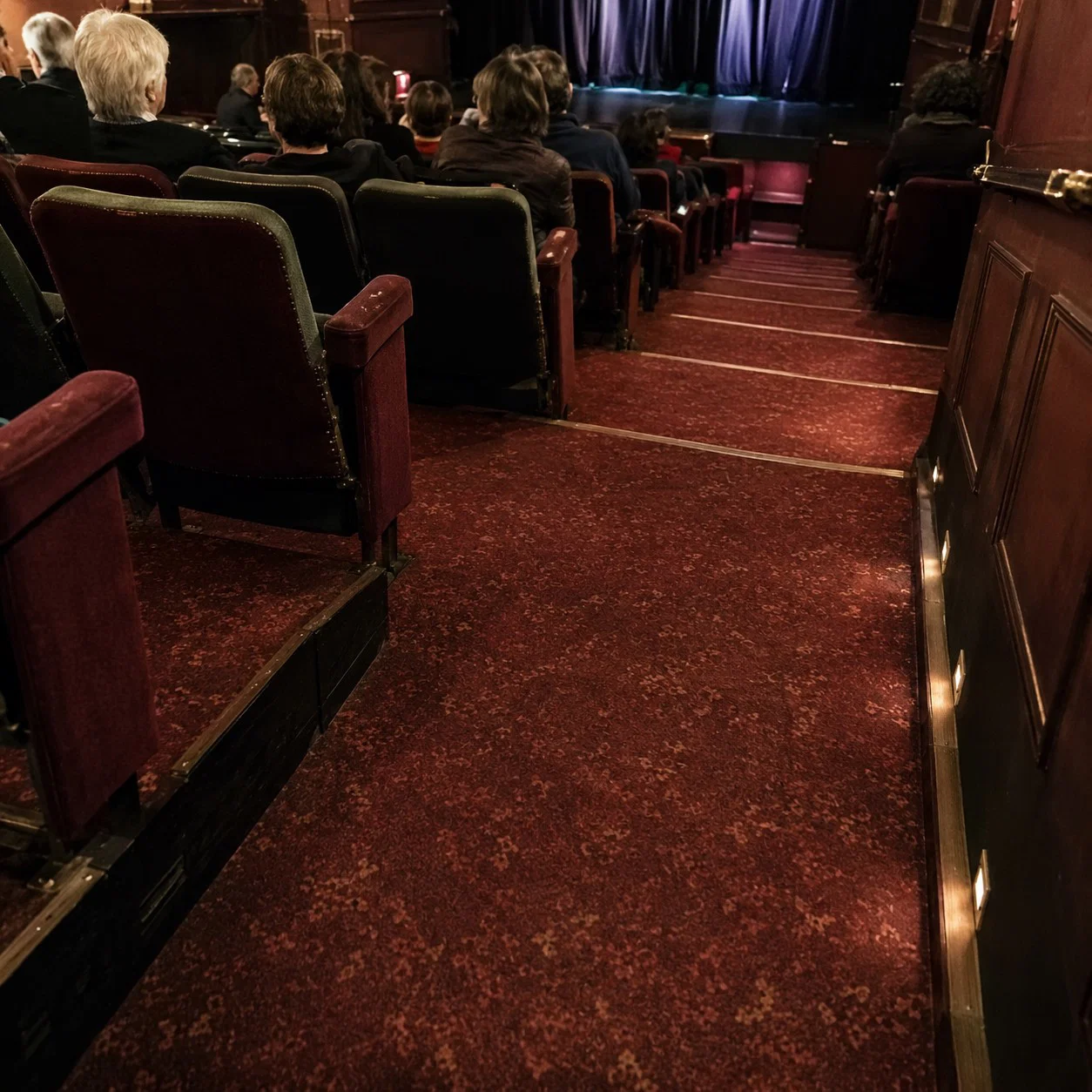
How West End Theatres Get Auditorium Carpet Cleaned Between a Matinee and an Evening House

“You’ve got from twenty past five,” the house manager told me, standing in the stalls at a house off Shaftesbury Avenue with a clipboard and no interest in negotiation. “I’m opening the house at half six. There’s a band call at six on stage, so nothing with a motor after ten to. And don’t touch the treads on the left, the rope’s come off.”

That is the brief. Not a specification, not a scope of works, a set of constraints delivered in forty seconds by someone who has eleven other problems. Two-show days in the West End produce a cleaning window that looks like two hours on paper and behaves like fifty minutes, and everything about the method has to bend around that rather than the other way round.

What is the real window between the two houses?

Take a matinee coming down at 17:05. The audience takes twelve to fifteen minutes to clear, longer if there’s a stage door crowd or a wheelchair party in the stalls needing lift access. Ushers do their sweep for lost property and left bags. You’re on the carpet at 17:25 at the earliest.

The house opens thirty minutes before curtain-up as standard, so a 19:30 show means front of house wants the auditorium presentable by 19:00. Deduct ten minutes at the end for grooming, moving kit out and getting the aisle rope back on. Everything I bring in has to be out of the auditorium before the half. Fifty to sixty-five minutes of working time, in a room with fixed seating, a rake, and roughly forty square metres of actual exposed carpet spread across aisles, cross-gangways, boxes and the stair treads at the back of the stalls.

Forty square metres in an hour sounds generous. It isn’t, once you’ve carried kit up from a basement store in a Grade II listed building with no goods lift and a spiral stair.

What “the half” does to a schedule

The half is called thirty-five minutes before curtain and it’s a company matter, not a cleaning one, but it fixes everything upstream of it. Once the half is called the building’s rhythm changes: the tannoy is live, the stage management team are running their checks, and anyone in a red shirt with a machine is in the way. I plan backwards from that call rather than from the curtain, and I’ve never yet had a house manager argue with that.

What lands on the carpet during a performance?

Ice cream, mostly. The tubs sold in the interval get eaten in the dark by people balancing them on a knee, and a proportion end up on the floor of the row in front. Melted dairy in a wool Axminster is a protein and fat mixture that goes rancid within a day or two in a warm auditorium, which is why an unattended one from a Wednesday matinee announces itself on Friday.

After that: prosecco and red wine in plastic beakers, spilt at the moment of a laugh line. Chocolate. Cough sweet wrappers, which are litter rather than soil. And chewing gum, pressed under seat frames and onto tread nosings, which is a separate job with a freeze spray and a scraper and which nobody costs properly.

The floor takes very little foot soil by comparison. A theatre audience walks maybe fifteen metres across carpet, indoors, having come off a pavement into a foyer. What kills auditorium carpet is spot damage and the cumulative residue of everything that got dabbed at with a bar cloth by a well-meaning usher. Those cloths carry bar detergent, which is alkaline and formulated for glassware, and a wool Axminster in a house that has been running the same production for four years has taken thousands of small applications of it. The rings that result are lighter than the surrounding carpet rather than darker, which is how you tell them apart from spills.

The interval decides most of it

Twenty minutes, a full house heading for two bars and four toilets, drinks carried back into a raked auditorium in the dark. That’s where the spills happen and that’s the moment worth engineering around. I’ve suggested to two venues that they change the interval ice cream to a format that doesn’t melt across a lap, and been told, correctly, that the sales figures make that conversation a non-starter. Fine. The carpet cost is then a known cost of the revenue, and it should sit in the budget as one.

Why is water usually the wrong answer in a listed auditorium?

Because you cannot dry it, and because the consequence of not drying it is a fall.

Auditoriums are raked. Some West End stalls rakes are steep enough that a damp aisle becomes a slip risk under the low light the house uses when the audience is coming in. Add stair treads with brass nosings and a patron in the dark looking for row H, and a wet carpet is a claim waiting to be filed. No production manager will accept that risk to save a cleaning contractor an hour.

Then there’s the building. Victorian and Edwardian houses have plaster, gilding, timber and electrical runs of uncertain vintage in places you wouldn’t expect. Getting a hose from the nearest tap, usually in a basement or a dressing room corridor, up to the dress circle means forty metres of line through fire doors that are supposed to stay closed. Some venues won’t permit it at all, and I think they’re right.

Smell is the third reason. An enclosed auditorium with a thousand people in it holds any odour you leave behind. Solvent, damp wool, a sweet-smelling deodoriser: all of them are noticeable from row C and all of them get reported to front of house within ten minutes of the house opening.

So what does go in

Low-moisture encapsulation on the aisles and cross-gangways with a compact cylindrical machine, worked in single passes with the pile groomed after. Absorbent compound where even that is too much, particularly on the treads and in the boxes. Targeted spotting on the dairy and alcohol marks with a wool-safe acid-side spotter, blotted and extracted with a small hand tool rather than flooded.

Everything dries inside twenty minutes with two low-profile air movers positioned at the back of the stalls and switched off before the half.

How do you work around a band call?

Quietly, and by knowing what’s happening on stage before you arrive.

Two-show days often carry a band call, a fight call, an understudy run or a sound check in the gap between houses. All of those need the auditorium silent from the stage’s point of view, and a vacuum in the stalls is louder in that room than anyone outside theatre expects, because the space is designed to carry sound from the stage in every direction.

The workable pattern: heavy and noisy work in the first twenty-five minutes while the crew are resetting the deck and nobody’s listening, then compound and hand work in the second half of the window, finishing well before the half. Ask the stage door keeper what’s called for the evening. They will know, they keep the day’s schedule on a clipboard by the sign-in sheet, and it takes fifteen seconds.

The cable problem

Old houses have very few accessible sockets in the auditorium and the ones that exist are frequently on circuits shared with something you must not trip. Battery machines have changed this work more than any chemistry has. A cordless cylindrical machine with a swappable pack removes the trailing cable across a raked aisle, which was the single most dangerous thing about the old method.

Where corded kit is unavoidable, run the line from the foyer, tape every crossing point, and walk it once with the house lights down to see what a patron would see. Nobody in a theatre needs telling twice about a cable run.

When does the actual cleaning happen?

Not between shows. The between-shows visit is presentation work: it removes what the audience will see and smell, keeps the spot damage from setting, and buys the floor another few days.

Restorative work goes on the dark day, and in the West End that’s usually a Monday. Anyone quoting a full restorative clean of a 900-seat auditorium inside a two-show turnaround is quoting for a spot check with a nicer invoice on it, and I say so when I’m bidding against one. Six or seven clear hours with the house lights up, no company in the building, and permission to make noise. That’s when the aisles get a proper extraction where the construction allows it, when the treads get done individually, and when the gum comes off.

The other opportunity is a dark week between productions, and the honest position is that most venues don’t get one. Get-out on a Sunday, fit-up starting Monday morning, scaffolding towers in the stalls by Tuesday. Any producer telling you the carpet can be deep cleaned in that gap has not looked at the schedule.

The only time the seats come out

Every few years a house strips seating for refurbishment or re-upholstery, and that is the one occasion when the carpet under the seat standards sees a machine. Under-seat carpet in a working theatre accumulates decades of dropped material, sweet wrappers, coins, programme staples and dust that has never had a machine head near it, and the difference between the exposed aisle and the ground beneath row K is the clearest illustration I know of what traffic and light do to wool.

Book that work at the point the seats come out, before the new fixings go in. A venue in Upper Street asked me to quote after their seats had gone back and I had to explain why the answer was no.

The band call that evening off Shaftesbury Avenue started at four minutes past six. We were in the van by seven, and the ice cream mark in row J came out.…

Traffic Lane Soiling in Flagship Retail: Footfall-Based Cleaning Frequencies and Where BS 7953 Entrance Matting Actually Fails

Forty-two thousand entries through one door on a Saturday in December. That’s the counter reading a flagship on Oxford Street showed me, and every one of those entries arrived wearing shoes that had been on a pavement between Oxford Circus and the store, some of them via the Bakerloo line. Assume conservatively that each pair of feet deposits a fraction of a gram of soil in the first few metres. Multiply it out and the entrance zone of that store takes on something in the region of a full vacuum bag of pavement grit in a single trading day, most of it landing in a strip about six metres deep and four metres wide.

That strip is where every retail carpet dispute I’ve been called to begins.

How much soil does footfall put into the first six metres?

Nearly all of it. BS 7953 is direct on the point: most of the soil in a building comes in on the soles of the people entering it, with wheeled traffic and wind-borne material making up the rest, and the quantity varies with weather and with what’s happening outside the door. Outside the door, in central London, is diesel particulate, brake dust, pigeon mess, chewing gum residue, and in winter a fine grey slurry of grit and salt from the pavement gritting run.

The deposition curve is steep. The first two metres inside a door take the heaviest load, the next four take most of the remainder, and by ten metres in you’re dealing with a fraction of what landed at the threshold. That’s why a flagship carpet fails as a photograph long before it fails as a floor covering: you have a dark grey mouth at the entrance and clean carpet at the back, and the eye reads the contrast rather than the absolute condition.

Colour makes it visible or invisible. Mid-tone flecked greys and heather mixes hide it. Flat charcoal shows every lighter grit particle sitting on top of it, and on a wet Saturday it shows the footprints too. Pale stone and taupe, which luxury brands specify constantly, show everything.

The thousand-entry rule I price against

I work on soil load per thousand entries rather than per square metre per month, because the square metre doesn’t change and the footfall does. A store doing 3,000 entries a day and a store doing 15,000 have the same floor area and a five-fold difference in what lands on it. Pricing them on the same monthly schedule is how contractors lose money on one and overcharge on the other.

Ask the retailer for the door counter export. Every flagship has one, it feeds their conversion reporting, and nobody in facilities ever thinks to look at it. Cross-reference a fortnight of counter data against the Met Office rainfall record for the same dates and you can predict which weeks the entrance zone will need pulling forward. I do this for two accounts and it has removed most of the emergency call-outs.

Where does BS 7953 matting fail in practice?

Not in the standard. BS 7953 says the system should scrape, wipe and retain, and should make contact with both feet of everyone entering, and that the objective is to achieve the maximum number of footfalls within the space available.The failures are all in what happens to that specification between the drawing and the shop floor.

The first failure is length. Both feet contacting the mat means several strides, which means a matwell of real depth. What flagship stores install is a strip a metre and a half deep, because the visual merchandising team wants the window scheme visible from the pavement and the first fixture positioned as close to the door as it can go. Retail space at the front of an Oxford Street unit is the most expensive floor area in the building and matting earns nothing on it. That argument is lost at design stage, every time, and it’s why I stopped raising it with anyone below store director.

The second failure is the approach angle. Mats are specified square to the door. People enter on the diagonal, cutting the corner from the pavement toward the escalator, and a diagonal path across a 1.5-metre mat gives you two steps at best.

Third, propped doors. Warm weather, doors hooked open, air curtain running, and a good proportion of the customer flow now enters at the edge of the doorway and misses the matting entirely. That happens all summer and nobody logs it.

Fourth, and the largest by volume, is every entrance that isn’t the customer entrance. Staff doors, goods-in, the fire exit that gets used as a smoking route. Stock arrives on cages wheeled straight off a wet loading bay and those wheels carry the same soil as shoes and deposit it in a continuous line rather than in footprints. I’ve traced a persistent black stripe in a Long Acre store back to a stockroom threshold with no matting of any kind.

The mat that is nobody’s job

A saturated mat is worse than no mat. Once the pile is loaded, it stops retaining and starts donating, and on a wet Saturday in a busy unit that happens by late morning.

Almost no retail cleaning contract I’ve read specifies who cleans the matting, how often, or to what standard. The nightly cleaner vacuums it. Vacuuming lifts dry particulate out of a rubber-backed nylon mat and does nothing about the litre of water and dissolved salt sitting in it. Matting needs extraction on its own cycle, or a rotation with a laundered replacement set, and the cost of that sits somewhere between the cleaning budget and the FM budget where it tends to fall through.

How do you set frequency by footfall rather than by calendar?

Take the counter data, split the store into bands, and give each band its own interval.

Entrance zone, the first six metres, is the only area that needs attention measured in days. For a unit doing over 10,000 daily entries that means an interim encapsulation pass every night the store is closed, with restorative extraction weekly or fortnightly depending on the season. February and November are worse than June by a wide margin.

Primary circulation, the routes to the escalator, lift and till bank, runs on a weekly or fortnightly interim cycle. Secondary areas, the space between fixture runs where customers browse rather than walk, holds up on monthly. The back third of most flagships needs vacuuming and nothing else for long stretches, and I’ve told retailers so while they were holding a quote for a full-floor deep clean that would have paid for two of my vans.

The till queue is its own problem. People stand still for four minutes, shifting weight, grinding whatever they carried in through the pile in one small area. Queue positions need the entrance-zone frequency even though they might sit thirty metres from the door.

Four bands, one map

Draw it on the store plan and hand a copy to the night cleaning supervisor. Band one at the threshold and the queue. Band two on circulation. Band three on browse areas. Band four everywhere else, vacuum only. That single sheet of paper does more for a retail carpet than any product I could sell on top of it.

Why does an identical carpet look worse in one branch than another?

Because the pavement outside is different, and because of what’s above the door.

A store with a deep recessed entrance and a canopy gets a strip of dry ground before the threshold, so a proportion of the water is already off the shoe. A store that opens flush to the pavement on the Kings Road takes rain straight in. Two branches of the same retailer with the same specification and the same footfall will diverge by a year of apparent wear, and area managers spend a lot of energy trying to explain the difference through staff performance.

Tube proximity does the same thing. Underground grit is fine, black, high in iron from brake and rail wear, and it’s oily enough to bond into pile in a way pavement dust doesn’t. A unit sitting over a station exit is fighting a different material. Two branches I look after in White City and on the Kings Road run the same specification and the same nightly regime, and the White City floor needs restorative work at roughly twice the frequency.

The decisions were made eighteen months before you got there

Carpet colour, pile construction, matwell depth and lighting are all fixed at fit-out, and they determine most of what a cleaning contractor can achieve afterwards. Track lighting angled down a traffic lane at a low angle exaggerates every pile disturbance and every shading variation. The same floor under diffuse ceiling light looks fine.

I say this to fit-out designers when I get the chance, which is roughly never, since carpet cleaners are engaged after handover and the fit-out team have moved to the next project by then.

What does a workable programme look like around trading hours?

Forty minutes after the shutters come down, before the night replenishment team start pulling stock onto the shop floor. Encapsulation through the entrance zone and the queue, groomed, dry by the time anyone walks it. That’s a two-operative job in a 6,000 square foot unit and it can run six nights a week without ever colliding with trading.

The matting swap that beats everything else

Restorative extraction goes in on the slowest night, which in most of central London is Monday or Tuesday, and it goes in zone by zone rather than store-wide, so there’s always a dry route from the door to the stairs.

The one thing worth spending money on beyond that: swap the matting for a laundered set twice a week through the winter. It’s unglamorous, it’s a rental line rather than a cleaning line, and on a wet Saturday it does more than everything else combined.

The Long Acre stockroom threshold got a 900mm rubber-backed mat in the end. The black stripe faded over about six weeks and hasn’t come back.…

The Challenges of Cleaning Wool Axminster in London Hotels, Members’ Clubs and Banqueting Suites

Wet wool has a smell. Warm, faintly animal, closer to a damp overcoat than to anything you’d associate with a five-star bedroom corridor. If you can smell it at nine in the morning on a floor cleaned at midnight, the job has gone wrong, and the brown edges will show up somewhere around Thursday.

Wool Axminster in a Mayfair hotel corridor is a different material from a nylon tile in an office and it wants a different trade. Same machine in the van, entirely different chemistry, entirely different tolerance for error. Get it wrong on a synthetic floor and you re-clean it next week. Get it wrong on an 80/20 wool-nylon Axminster with a jute weft and you’ve cost a hotel group a corridor replacement at somewhere north of ninety pounds a square metre, plus the room revenue lost while the fitters are in.

Why does wool punish chemistry that works everywhere else?

Wool is a protein fibre. Keratin, held together in part by disulphide bonds, wrapped in an overlapping scale structure that makes the whole thing behave like hair, because it is hair. Alkali attacks those bonds. Raise the pH far enough and the fibre swells, yellows, loses tensile strength and never comes back to where it started.

The working window runs from about pH 4.5 to pH 8, and the sensible practice is to stay well inside it rather than flirt with the top end. Most general-purpose alkaline pre-sprays sold for commercial carpet sit at 10 or above. One pass with one of those on a wool corridor will not visibly destroy it. Forty passes over four years absolutely will, and the damage arrives as a gradual dulling and yellowing that housekeeping blames on age.

Heat compounds it. Solution temperature wants to stay moderate, and I keep it well under the levels I’d happily run on a nylon tile, because heat plus alkali plus mechanical agitation is the recipe for felting. Felted wool corridor is unrecoverable. Nothing lifts it, nothing re-opens the scale structure, and the only remedy is a fitter.

The acid rinse is the part that matters

WoolSafe accreditation is worth having and I hold it, but the certificate on a van is not what protects a carpet. What protects it is finishing acid-side. Pre-spray inside the window, then rinse with an acidic agent that neutralises whatever alkalinity is left and leaves the fibre sitting slightly acid, which is where wool is happiest and where dyes are most stable.

For my money the single most common failure in hotel wool care isn’t the contractor at all. It’s the housekeeping trolley. A general spotter at pH 11 applied by a room attendant to a coffee spill on the fourth floor, three times a week, across two hundred rooms, does more cumulative damage than any annual deep clean.

What causes the brown haze that turns up two days after you’ve left?

Cellulosic browning, and the culprit is underneath the pile rather than in it.

Woven Axminster is built on a backing that historically includes jute weft and cotton warp. Jute contains lignin and tannins. Wet that backing and leave it wet, and those compounds dissolve, travel upwards through the yarn as the carpet dries from the bottom, and deposit at the tips of the pile where the evaporation happens. What you get is a soft brown or amber cast, worst along the edges and in the areas that took the most water. It looks like soiling. It won’t respond to being cleaned again, and cleaning it again is the instinct that makes it worse.

I saw a bad one on Southampton Row where a national contractor had extracted 140 metres of bedroom corridor in a single night with no airflow and the fire doors closed. The corridor was patchy amber by the weekend. The hotel paid twice, once for the clean and once for me to attempt a correction, and the correction was partial.

Prevention is the whole discipline. Control the water going in, run two dry strokes for every wet one, use a low-moisture method wherever the soil load allows it, and get air across the floor before the fibre has time to hold moisture against the jute overnight. Wool will absorb around a third of its own weight in water before it feels wet to the hand, which is why the hand is a useless instrument for judging this.

Once browning is in, treatment is an acidic browning agent applied and extracted, sometimes twice, and the honest position is that severe cases don’t fully clear.

Basements, August, and no ventilation

The worst combination in London is a basement banqueting suite in a heatwave with the HVAC on a night setback. High ambient humidity, no air movement, a carpet with cellulose in the backing and a 6am breakfast service. I have turned down full hot water extraction in exactly that situation at a club off Pall Mall and offered dry compound and a spot programme instead, and I’d turn it down again. Some rooms cannot be safely extracted in July and August, and any contractor who tells a banqueting manager otherwise is gambling with somebody else’s floor.

Can optical brighteners be got out of wool once they’re in?

No, and this is the one that ends relationships.

Fluorescent whitening agents work by absorbing ultraviolet and re-emitting it as visible blue light, which is how they make white shirts look whiter. On wool, which is naturally creamy rather than white, they leave a bluish cast that photographs badly and reads as wrong under the warm lighting that every decent hotel uses. They bind. They don’t rinse out. <cite index=”33-1″>WoolSafe testing goes past the pH in the bottle to look at residual effects and re-soiling behaviour, and optical brighteners are excluded outright.</cite>

The route in is almost never the carpet cleaner. It’s laundry product migrating to the wrong cupboard, or a well-meaning duty manager buying supermarket carpet shampoo for an emergency at two in the morning. A private members’ club off Half Moon Street had a two-metre patch in its dining room that fluoresced blue under a UV torch in a shape matching the mop head somebody had used on it. That patch is a replacement, whenever they get round to it.

Audit the housekeeping cupboard before you audit the contractor

Walk the floor pantries on every level and read the labels. Any product carrying a fluorescent brightener, chlorine bleach or a pH above 9 comes out of the building. Replace it with one wool-safe spotter and train the attendants on blotting rather than scrubbing, because agitating a wet wool pile with a cloth in a circular motion is how you get a permanently distorted patch the size of a saucer.

How do you get crushed Wilton pile to stand back up again?

You groom it, and you accept that some of it is permanent.

Wilton and Axminster are different weaves doing different jobs. Wilton runs a continuous yarn with the unused colours buried in the body of the carpet, which produces a dense, hard-wearing loop or cut pile that suits a corridor. Axminster inserts each tuft individually, which allows the unlimited colour palette that ballroom and casino designers love.

Corridor Wilton fails visually through pile crush before it fails through wear. Trolley wheels, suitcase castors and the same walking line down the middle of a two-metre corridor lay the yarn flat, and flattened pile reflects light differently, so it reads as a dark stripe.

Wool recovers better than any synthetic here because of the crimp built into the fibre. Moisture and warmth let the yarn re-swell and stand. That’s a genuine advantage of the material and it’s why a fifteen-year-old wool corridor in Bloomsbury can be brought back to something presentable when a nylon equivalent would be finished.

Grooming, and the tool nobody in-house owns

A pile lifter with a counter-rotating brush, run before cleaning to lift the yarn and release the dry soil trapped at the base, then a groomer pass after cleaning to set the pile direction uniformly. That second pass is the difference between a corridor that looks cleaned and one that looks new, and it takes eight minutes per fifty metres.

Uniform pile direction matters more than most people credit. Shading and watermarking – the light and dark patches on cut pile wool that look like spills and aren’t – come from pile reversal, and no amount of cleaning removes them. A groomer manages the appearance. Nothing cures it.

How do you schedule this around occupancy?

Corridors go in rotation, floor by floor, never the whole building. For my money that rotation is the only maintenance decision in the whole programme that changes the ten-year outcome. A 200-bedroom hotel in Lancaster Gate might run one floor per month on a twelve-week cycle with the high-traffic lift lobbies pulled forward to six weeks. That gives you a manageable footprint, a corridor closed for three hours rather than a building disrupted, and airflow you can deliver with the kit you’ve carried up in a service lift.

Work between 10am and 3pm rather than overnight. The reason is drying: daytime gives you the HVAC running on its normal cycle and the option of opening a fire escape door under supervision. Night work on wool means still air, and still air is browning.

Reading the events diary a quarter ahead

Banqueting is scheduled against the diary rather than the calendar. Get the events list a quarter ahead, find the gaps, and take the seven-hour windows between a Friday wedding breakdown and a Saturday setup. For my money that is enough time on wool if the method suits the window. You can clean a 400-cover suite properly in that window using low-moisture methods. You cannot extract it properly, and the choice between those two is the choice a lot of contractors quietly get wrong.

The corridor on the third floor of that Southampton Row hotel is still amber near the skirtings. They put a runner over it.…

Do Commercial Tenants Have to Professionally Clean Carpets at Lease End?

No.

Not automatically, and not because a managing agent’s checklist says so. Whether you owe a lease-end carpet clean depends on what your lease says, what condition the floor was in when you took it, and what the landlord plans to do with the space in the eighteen months after you hand the keys back. I’ve cleaned floors in Clerkenwell where the tenant had no obligation at all and paid us anyway because it was cheaper than the argument. I’ve also told a tenant in Southwark to keep their money because the whole floor was coming out in July.

I clean carpets for a living and I read a lot of schedules. What follows is what I see from that side of the table, and none of it is legal advice.

Does your lease put carpet cleaning on you?

Read the yielding-up clause first. Most London commercial leases require the tenant to yield up the premises in repair and decorated, and many add a phrase about leaving the premises clean, or in a clean and tidy condition. That last phrase is where carpet cleaning lives. There’s no separate covenant called “professionally clean the carpets” in any lease I’ve been shown.

Then check whether carpets are part of the demise at all. In a lot of Grade A lettings the floor covering was installed by the tenant as part of a Category B fit-out, which makes it a tenant’s alteration. If it’s an alteration, the question stops being about cleaning and becomes about reinstatement, and the landlord may have a licence to alter that requires the whole lot to be lifted and the raised access floor left exposed. Nobody cleans a carpet they’re contractually obliged to skip.

Where the tiles came with the building, they’re landlord’s fixtures, and condition on handover is a repair-and-cleanliness question. Leases granted on a shell-and-core basis with a lengthy fit-out rent-free period almost always fall the other way, and I’ve seen tenants pay for cleaning on floors they installed themselves and were separately being asked to remove.

Where “yield up” quietly turns into a cleaning bill

The wording that costs tenants money is the compound one: yield up in good and substantial repair and condition. “Condition” does more work than tenants expect. Heavy traffic-lane soiling in a floor that was handed over new is arguable as a failure of condition, and it lands on the schedule as a specialist clean, usually at a rate the surveyor pulled from a cost book rather than from anyone who owns a machine.

What does a schedule of condition change?

Everything, if you have one and it’s any good.

A schedule of condition is a photographic and written record annexed to the lease at grant, limiting your repair obligation so you don’t have to hand the space back better than you found it. For carpets, this is the difference between a claim and a conversation. If the annexed photographs show a five-year-old floor with visible lane greying at the point you took occupation, the landlord is claiming for a condition that predates you.

The trouble is that most schedules of condition are prepared with the building fabric in mind. Roof, windows, M&E plant, the state of the WC cores. Floor coverings get one wide-angle shot per room taken from the doorway with the blinds open and the sun behind the camera, which shows nothing. I’ve sat in a handover meeting in Fitzrovia where the tenant’s only carpet evidence was a photograph so bright the tiles read as uniform beige. They were not uniform beige. They had a coffee route running from the kitchenette to the meeting rooms that predated the lease by two tenants.

Photographs beat adjectives

If you’re taking a lease now, get the floor documented properly at grant. Close-range shots at pile level, taken with the overhead lighting on and the blinds shut, in the lift lobby, at every entrance threshold, along the primary circulation route and in front of every tea point. Note existing burns, bleach spots, castor damage and any tiles that were already replaced from a different dye lot. Twenty minutes of work at the start removes an entire category of dispute at the end.

What do surveyors look for when they walk the floor?

Contrast, mostly. A dilapidations surveyor inspecting a 12,000 square foot floorplate in Aldgate is not crawling about with a soil-load meter. They walk the circulation route, look down, and record where the carpet is visibly different from the carpet next to it. Traffic lanes, lift lobby fans, the arc in front of the double doors, the two square metres beneath every desk where a chair has ground grit into the pile.

They also photograph anything with an edge to it. Individual stains, mismatched replacement tiles, curled corners, fraying at door thresholds. Those items are easy to describe and easy to defend, so they end up itemised on the schedule while general soiling gets one catch-all line.

The thing that consistently draws a claim is patch replacement. A tenant who has swapped fifteen tiles over six years from attic stock that no longer matches has produced a floor with visible chequerboarding, and a surveyor will price replacement of the whole area rather than a clean. That’s a self-inflicted wound and it’s usually the largest carpet number in the claim. Keep spare tiles from the original delivery, sealed, in the comms room. Buying tile from the same range four years later gets you the same product code and a different batch, and under 500 lux of downlighting that difference is obvious from standing height.

Lift lobby and desk positions get read differently

Common-part-facing areas carry the reputational weight. A landlord marketing the floor to a replacement tenant cares more about the twelve square metres a viewer sees stepping out of the lift than about the state of the pile under desk 47. Surveyors know this and weight accordingly, whatever the schedule says about uniform condition throughout.

When does the carpet line vanish from the claim entirely?

When the landlord is going to rip it out anyway.

Section 18(1) of the Landlord and Tenant Act 1927 caps damages for breach of a repairing covenant at the amount by which the value of the landlord’s reversion is diminished by the disrepair. <cite index=”20-1″>The second part of the section goes further: no damages are recoverable where it can be shown that at the end of the term the premises would be demolished or altered so as to render the repairs valueless.</cite> Surveyors call the second point supersession, and <cite index=”28-1″>the 7th edition of the RICS guidance note on Dilapidations in England and Wales, effective from December 2016, added basic guidance on it.</cite>

Supersession, without the surveyor’s vocabulary

In practice, if the landlord has already tendered a Category A refurbishment that includes new floor coverings, a claim for cleaning the old ones is superseded. The cleaning would be valueless. This is not obscure – <cite index=”24-1″>the Dilapidations Protocol requires the landlord’s surveyor, in endorsing a schedule, to confirm that full account has been taken of the landlord’s intentions for the property.</cite> The intentions are supposed to be on the schedule already.

Here’s my unpopular position, and it costs me work: if you can see a strip-out contractor’s hoarding going up on the floor above, do not pay anyone to clean your carpets. Not us. Ask your surveyor to put the supersession point in the response and let the two of them settle it. I’ve had two clients in Chiswick Park book a full-floor extraction in the last fortnight of their term while the incoming tenant’s fit-out drawings were already with building control.

The reverse of that rule holds just as firmly. Where there’s a schedule of condition, no refurbishment in prospect, and a floor that a viewing agent will walk a prospect across next month, clean it. The claim line for specialist cleaning on a floor that size is typically somewhere between one and three thousand pounds, and a tenant’s surveyor who bills four hours arguing that line has spent more than the work costs. Concede it and fight the M&E items, which is where the real money sits.

What’s worth doing in the final ninety days?

Get a copy of the lease, the licences to alter and any schedule of condition into one folder, and read the yielding-up clause with the floor plan next to it. Work out which areas are landlord’s fixtures and which are your fit-out. That takes an afternoon and it determines whether cleaning is even the right question.

Then ask the landlord’s agent, in writing, what the intentions for the space are. You are entitled to an answer, and the answer determines the supersession position on every line of the eventual schedule.

Time the clean so it survives to inspection

A clean done six weeks before handover, with staff still occupying the floor and the tea point still running, will be back to where it started by the time the surveyor arrives. Book it after the last desk goes and after the strip-out of your own furniture, when the empty floorplate shows every mark the movers made. Skid marks from pedestal drawers dragged across a lobby are a common one. So is adhesive residue where somebody taped cable protection down for eight weeks in a Camden building I worked in last autumn and pulled it up in January.

Budget for the movers’ damage rather than the accumulated soiling. Six years of traffic responds to encapsulation and a decent extraction. Two days of a removals crew produces oil marks from trolley wheels, torn tile edges at lift thresholds and adhesive tape residue, and those are itemised line items with photographs attached.

The surveyor’s inspection date is the only date that matters. Everything before it is rehearsal.

Last year a tenant off Great Suffolk Street handed back 4,000 square feet with a clean floor, a five-page photographic schedule of condition from 2017, and a two-line carpet entry. It settled at nil.…

Carpet Tile Restoration in Grade A City Offices: Encapsulation, Hot Water Extraction and the 12-Hour Reoccupation Window

Twenty past seven on a Friday, sixteenth floor of a tower off Bishopsgate, and the facilities manager wants sixty desk positions and two breakout areas cleaned and walkable before the close-out crew badge in at eight the next morning. Sensible ask. What decides whether that job lands has almost nothing to do with the carpet itself. It comes down to whether the landlord will run the air handling past nine, whether the goods lift is booked in a named person’s name, and what those tiles are stuck to. Get those three wrong and the fibre could be spotless at 2am and the floor still fails at handover, because it’s damp, and damp on a trading floor is a conversation nobody enjoys having at six in the morning.

Why do Grade A carpet tiles look tired years before the fibre wears out?

Premium modular tile in the City is almost always solution-dyed nylon 6,6, tufted loop, on a bitumen, PVC or newer polyolefin backing. That fibre is warranted for a decade or more of commercial traffic and it usually earns it. Pull a tile from a lift lobby in a 2016 fit-out and look at it edge-on: the pile is standing, the tufts are intact, the colour is unbroken because it was dyed as liquid polymer rather than printed on afterwards.

What’s gone is clarity. Traffic lanes grey out. The route from the lift core to the tea point goes two shades darker than everything either side of it, and because Grade A floorplates are lit hard and evenly, that stripe is visible from forty feet away. Tenants read it as wear. It’s soil.

I’ve had this argument on a floor off Fenchurch Street where the incoming occupier had already priced 900 square metres of replacement tile. We cleaned a 30-square-metre trial patch across the worst of the lane on a Tuesday evening. They cancelled the order and spent the money on barrier matting and a better vacuum spec instead. That floor is still down.

What sits in a City traffic lane?

Most of it is dry. Grit and pavement fines walked in off Gracechurch Street, toner dust, paper fibre, skin cells, the fine black particulate that gets into every building inside the Congestion Charge zone whether the windows open or not. That material is abrasive and it sits low in the pile, cutting the fibre every time somebody walks over it.

Sitting on top of the dry load is a thin oily film – hand cream, cooking aerosol drifting out of the tea point, lift-lobby residue, the odd flat white. The film is what makes the dry soil stick. Deal with the film and a good deal of the greying lifts out with a vacuum you already own.

When is encapsulation the right call, and when is it lipstick?

Encapsulation chemistry is a crystallising polymer. You apply it dilute, agitate it into the pile with a counter-rotating cylindrical brush, and as it dries it surrounds each soil particle and goes brittle. The soil stops being sticky. It stops binding to the fibre. The following morning’s vacuum pass pulls the crystals out, and if the building’s cleaning contractor is running a decent upright with a beater bar rather than a tub vac on a stick, that recovery does most of the job.

Dry time on a properly dosed encap pass is somewhere between twenty and forty-five minutes with basic airflow. That’s why it dominates commercial maintenance work. You can run a 2,000 square metre floorplate in Canada Square between seven and midnight and hand it back with hours to spare.

Here’s where I’ll lose some friends: most City floors that get booked in for full hot water extraction do not need it. The annual restorative deep clean written into a lot of FM contracts is a line item that survives because nobody has questioned it since the contract was novated, and on medium-soil floors it buys a marginal improvement over a well-run quarterly encap programme while costing four or five times as much and putting water into a building that has nowhere to put it. I’ve turned down whole-floor extraction jobs in Victoria and been asked, more than once, whether I was serious.

Encapsulation stops working where the oily load has gone past a film and become a coating. Serveries, the two metres in front of a bean-to-cup machine, entrance zones on a wet week in February. Keep encapping those and you build residue, the tile takes on a slight tack, and it re-soils faster each cycle. That’s the failure mode people blame the chemistry for when the real fault was the schedule.

The brush matters more than the bottle

Chemical suppliers sell polymer. What determines the result is agitation. A cylindrical machine with the right brush hardness for a low-profile commercial loop drives product to the base of the tuft and lifts the pile back up on the same pass. A rotary bonnet skates over the surface, grabs the top third of the soil, and leaves everything below it. On a 4mm pile height in a Grade A office, a bonnet is a floor buffer with a towel on it.

What breaks a hot water extraction job in a City tower?

Water going where it can’t come back from.

Grade A floorplates sit on raised access flooring. Under those tiles is a panel, usually a chipboard core in a galvanised steel tray, and under that is a void carrying power, data and sometimes chilled water. Overwet a bitumen-backed tile and moisture travels sideways along the backing to the tile joint, down the joint, and onto the panel edge. Chipboard edges swell. Swollen panels rock. Rocking panels get reported as a trip hazard, an engineer lifts the floor to look, and now your carpet clean is an FM incident with photographs attached.

The visible failure is uglier and faster. Bitumen bleed shows up as brown ghosting that traces the outline of every tile, a perfect grid, appearing eight hours after you’ve left. Adhesive residue wicks up the same way. Neither responds well to being extracted again, which is the instinct.

So extraction on modular tile is a volume-control discipline. Pre-spray light and dwell properly rather than flooding to compensate. Two dry strokes for every wet one. Hand tool around floor boxes and the perimeter trunking, where the joints are widest and the cable penetrations sit. Moisture meter readings before you leave, not just a hand on the pile. And no extraction at all within a metre of a comms room threshold, which I’ll defend to anyone.

The one place extraction earns its money

Entrance matting wells and the first six metres inside a revolving door. That soil is wet, mineral-heavy, and mixed with de-icing salt from November onwards. Encap cannot crystallise its way out of that. Same for anywhere food is served, where the load is protein and oil rather than particulate.

Can you hand a floorplate back inside twelve hours?

Yes, if the twelve hours are real. Most aren’t.

Count backwards from an 07:00 reoccupation. Security clearance and passes take fifteen minutes per operative if the building has an on-site desk and forty if the pass office closed at six. The goods lift at a King’s Cross building I work in near Pancras Square is shared with three other contractors after hours and it’s booked in twenty-minute slots. Kit up, protect the lift car, run cable. On the night you have lost an hour before a machine touches carpet.

Then the drying. Airflow is the whole game. Airmovers at low profile, angled along the lane rather than at it, one unit per twelve to fifteen linear metres, plus an LGR dehumidifier if the floor is sealed and the outside air is anything above about 12°C dew point. Without dehumidification in a closed building you are moving damp air in a circle.

Which brings up the part that sinks more overnight jobs than anything else on the night: the landlord’s out-of-hours HVAC charge. Base build air handling runs to a schedule, typically 07:00 to 19:00 weekdays. Beyond that, someone pays hourly, and the request usually needs 48 hours’ notice through the building management team. If the tenant hasn’t raised it, the system is off, the floor is sealed, relative humidity climbs into the seventies by 1am and nothing dries.

The circuit nobody checks

Twelve airmovers do not run off the cleaner’s cupboard socket. You need to know which circuits you’re on and how they’re protected, and on the night you want that confirmed by the building engineer rather than discovered by tripping an RCD that also feeds a floor’s worth of desk power. I ask for it in writing now. That habit came from a Hammersmith Broadway job in 2021 that I’d rather not describe in detail.

What should a maintenance regime for Grade A stock look like?

Zone it and stop treating a floorplate as one surface. Entrance and lift lobby carry perhaps eight times the soil load of the space under desks. Under-desk tile in a modern hybrid office sees a few footfalls a week and needs vacuuming, nothing else, possibly for years.

A regime I’d defend: lobby and entrance zones encapped monthly, extracted twice a year. Primary traffic lanes and breakout areas encapped quarterly. Tea points and servery approaches extracted quarterly because of the oil. Open-plan desk areas vacuumed properly and left alone, with attic-stock tile rotation swapping worn lobby tiles for pristine under-desk ones at the eighteen-month mark.

The boring intervention that beats all of it

The unglamorous item that outperforms every schedule above is barrier matting. Ten metres of it inside every entrance, cleaned weekly, catches soil before it becomes your problem. Buildings that skimp on matting spend the saving four times over on cleaning, and I have never once persuaded a fit-out designer of this at the design stage.

That Bishopsgate floor from the Friday night went back at 05:40, meter-dry, on encap through the lanes and extraction across the two breakout zones only. The tiles under the desks are the original install. The eight square metres in front of the lift have been replaced twice.…